

Tbilisi State Medical University and University College
London (UCL) have expressed their readiness to strengthen cooperation in
research, diagnostics and the investigation of genetic causes of cerebral palsy
in children.
On 14–15 August, Dr. Reza Maroofian, Principal Investigator
and Specialist at the UCL Queen Square Institute of Neurology, visited TSMU.
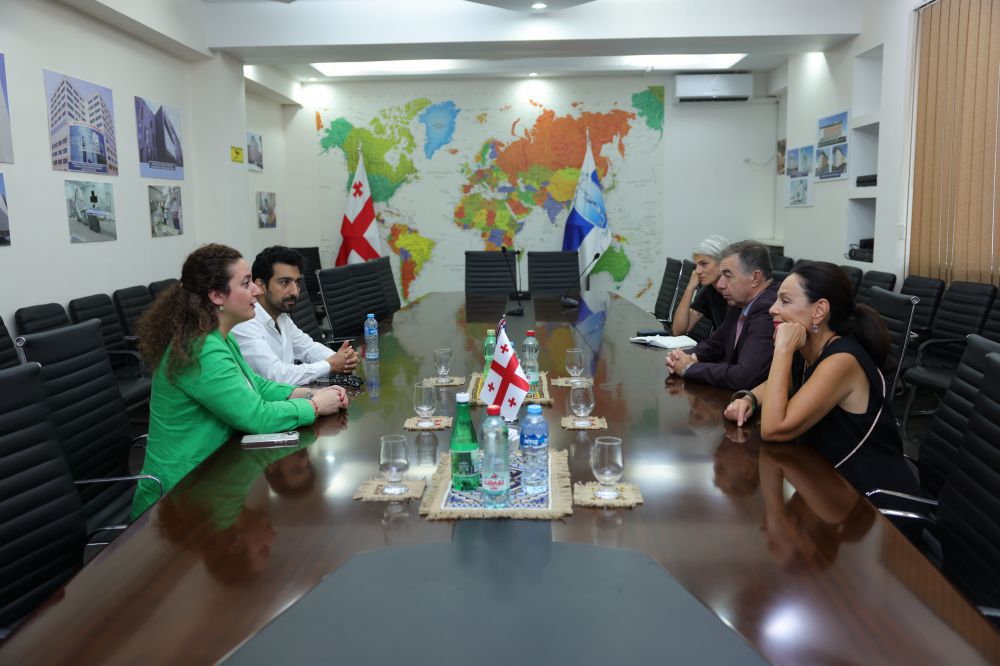
Within the framework of the visit, Dr. Maroofian met with Professor Irakli
Natroshvili, Rector of TSMU, Professor Tinatin Tkemeladze, Dean of the Faculty
of Medicine and Associate Professor Tinatin Kilasonia, Head of the Department
of International Relations.
For the past two years, TSMU and UCL have been actively
collaborating on a joint project focusing on genetic analyses of children with
neurodevelopmental disorders, aiming to identify rare genetic diseases
responsible for these conditions. Such research is essential for the subsequent
treatment, management and prevention of these disorders. The ongoing project
particularly addresses neurological problems among children from ethnic
minority communities in Kvemo Kartli.
The collaboration has already produced significant
scientific outcomes: two joint publications have appeared in high-impact
journals, Nature Genetics and Movement Disorders (PMID:
40590574, PMID: 39578646).
During the meeting, both parties agreed to expand the scope
of their cooperation. Rector of TSMU is a paediatric neurologist and emphasized
the importance of this initiative, noting that at the Ken Walker University
Clinic of Medical Rehabilitation, he receives nearly 400 patients monthly
diagnosed with cerebral palsy.
Dr. Maroofian proposed that all genetic analyses of
children with cerebral palsy from Georgia be sent to UCL’s research center,
where the testing would be conducted free of charge and the results
subsequently shared with Georgian specialists. The partners agreed that the project
would not only support patient diagnostics but also lead to publications in
high-impact international journals and the establishment of a genetic database
in Georgia.
“We would be delighted to host your students, train them in
database processing and provide them with the skills to develop and manage such
databases in Georgia. Many countries are currently establishing national
genetic databases and biobanks. Creating such a resource will help identify
which genetic disorders are prevalent in your population and determine the frequency
of particular genotypes—knowledge that is essential for advancing precision
medicine. This collaboration will be mutually beneficial for both
institutions,” stated Dr. Maroofian.
Professor Irakli Natroshvili guided Dr. Maroofian on a
visit to the Ken Walker University Clinic of Medical Rehabilitation.
The UCL Queen Square Institute of Neurology is one of the
world’s leading and most productive neuroscience research centres, renowned for
its high-impact publications and global partnerships with leading research
institutions. According to Dr. Maroofian, the Institute places particular
emphasis on enhancing collaboration with and providing support to countries
with limited resources—an area where Georgia is of special interest.
.JPG)
.JPG)
.JPG)
.JPG)
.JPG)
.JPG)
.JPG)
.JPG)
.JPG)
.JPG)
.JPG)
.JPG)
.JPG)
.JPG)
.JPG)
.JPG)
.JPG)